

Inside This Article:
- A proposed class-action lawsuit alleges a popular tomato brand misled consumers about the authenticity of its San Marzano tomatoes.
- While the brand has called the claims meritless, even unproven allegations can lead to significant legal expenses and reputational damage.
- Commercial General Liability (CGL) Insurance can help cover expenses associated with advertising-related lawsuits, while Excess Liability Insurance can provide additional protection.
- Companies throughout the supply chain may be named in lawsuits over advertising and authenticity claims.
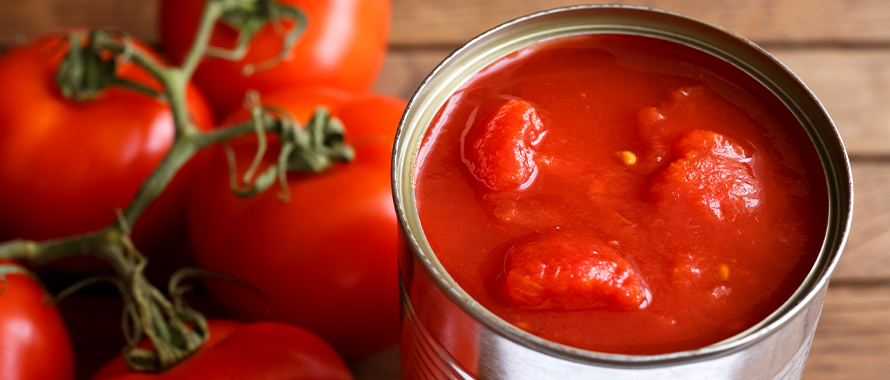
A proposed class-action lawsuit alleging “tomato fraud” against a popular food brand is highlighting the potential financial and reputational risks associated with product labeling and marketing claims. California consumers recently filed a class-action suit against Cento Fine Foods that alleges the company’s canned tomato products were falsely marketed as containing authentic San Marzano tomatoes, ABC News reported in May.
The lawsuit seeks more than $25 million in damages and claims that marketing the product as “Certified San Marzano” tomatoes is “false, misleading, and unfair,” as they do not have the taste and other attributes of authentic San Marzano tomatoes, the outlet reported. Cento Fine Foods reportedly maintains that the allegations are meritless.
“That could cause a huge loss of sales, even if they are not found liable,” said Andrew Chen, Senior Broker, Commercial Insurance, Burns & Wilcox, San Francisco, California. The media attention surrounding this type of lawsuit could cause a brand to “lose millions of dollars in sales,” he said.
When a food manufacturer or distributor is sued over allegations involving misleading marketing, product labeling, or false advertising, the company’s Commercial General Liability (CGL) Insurance can help cover legal costs, settlements, and other expenses.
“In a class-action lawsuit, those settlements can be massive,” said Selena Bateman, Underwriter, Commercial Insurance, Burns & Wilcox, Salt Lake City, Utah. “In many cases, it could take a company under.”

In a class-action lawsuit, those settlements can be massive. In many cases, it could take a company under
The impact of false advertising allegations
The proposed class-action lawsuit against Cento Fine Foods was initiated by two consumers in California who said they purchased multiple cans of the tomatoes at “premium” prices and never would have purchased them if they knew they were not authentic, ABC News reported.
Similar lawsuits have targeted other product claims. Earlier this month, Kroger agreed to pay $1.25 million to settle a lawsuit brought by district attorneys in California over inaccurate calorie counts on several of its Kroger-branded Carbmaster bread products, ABC News reported June 8. In March 2025, Reynolds Consumer Products was facing a proposed class-action lawsuit alleging its Reynolds Wrap aluminum foil was misleadingly marketed as “Made in USA,” Reuters reported.
Chen said consumers may feel deceived after paying more for products they believe offer greater quality. “You assume that you are paying a premium to get something authentic,” he said.
Food labeling disputes can have major legal and financial consequences. Even before a lawsuit is resolved, publicity surrounding allegations can affect customer perception and future sales. “I can see that being really devastating to a company,” Bateman said.
In an increasingly litigious society, these lawsuits are not uncommon. “There are a lot more lawsuits nowadays,” she said. “Individuals may even try to find errors in things so they can create lawsuits.”
Claim costs are also rising, Chen said. “Jury verdicts have gone up a lot,” he said. “That, plus inflation, has increased the cost of a lot of these claims and then in turn increases insurance premiums. That is definitely a trend we have been seeing.”

Jury verdicts have gone up a lot. That, plus inflation, has increased the cost of a lot of these claims.
How CGL Insurance can respond to product-labeling lawsuits
Allegations involving a product’s labeling can trigger coverage under the Personal and Advertising Injury portion of a CGL Insurance policy. This type of coverage, which can also respond to claims over marketing materials or websites, is a standard component of most CGL Insurance policies and can help pay for legal defense costs, settlements, judgments, and other covered losses, Chen said.
Attorney fees alone can be substantial, particularly in class-action litigation, and business owners should review whether their CGL Insurance includes defense costs inside or outside of their policy limits.
“Everything has increased due to inflation,” Chen said. “This could be a costly lawsuit, even if they are 100% innocent. [Coverage for defense costs] is an important part of insurance policies.”
However, allegations involving intentional deception or fraudulent conduct may be treated differently, Chen pointed out. “Anything illegal or fraudulent would typically be excluded,” he said.
Policy language and exclusions can vary significantly among insurance carriers, so it is important to read all policy wording, Bateman emphasized.
“When we are writing policies, we want to make sure they are giving us all the information about their operations,” she said. “If they are doing something we do not know about, there could be an exclusion.”
Coverage considerations for food businesses
According to Chen, false advertising and other food-related lawsuits frequently name multiple organizations in the supply chain. Food manufacturers, distributors, importers, and retailers should carefully review their insurance policies to ensure they are properly classified and adequately protected.
“If they import anything, or they relabel or re-package products, that is technically a manufacturer in the eyes of an insurance company — even if they are not actually making the product,” he explained. “These lawyers are usually going to go after everybody in the chain, including the shipper, manufacturer, and the retailer selling it. They will try to pull in as many parties as they can.”
These lawyers are usually going to go after everybody in the chain, including the shipper, manufacturer, and the retailer selling it. They will try to pull in as many parties as they can.
Food businesses also face increasing scrutiny from consumers seeking greater transparency about ingredients, sourcing, manufacturing methods, and product origins. In a 2025 global consumer survey by Innova Market Insights, 58% of respondents said clear information about ingredients and sourcing was important when making purchasing decisions.
Excess Liability Insurance can provide an additional layer of protection above primary CGL Insurance policy limits. This is often recommended for companies of all sizes, though any company with significant sales in the U.S. “should definitely consider Excess Liability coverage,” Chen said.
Beyond false advertising claims, food quality issues and recalls are another primary risk for food manufacturers, distributors, and retailers. These organizations should understand how their Product Liability Insurance could respond to such claims and ensure they also carry a separate Product Recall Insurance policy, which can cover expenses associated with removing products from store shelves during a recall, customer notification, product disposal, and more.
Bateman encouraged business owners to work closely with an insurance professional to review their policies and identify potential coverage gaps.
Their agent should go through the policies with them and make sure they understand what their coverages are and that they have all the coverages in place that they need. There is always a solution. You just have to dig deep enough to find it.
“Their agent should go through the policies with them and make sure they understand what their coverages are and that they have all the coverages in place that they need,” Bateman said. “There is always a solution. You just have to dig deep enough to find it.”